
Emptying and Transportation
Kigali, Rwanda.
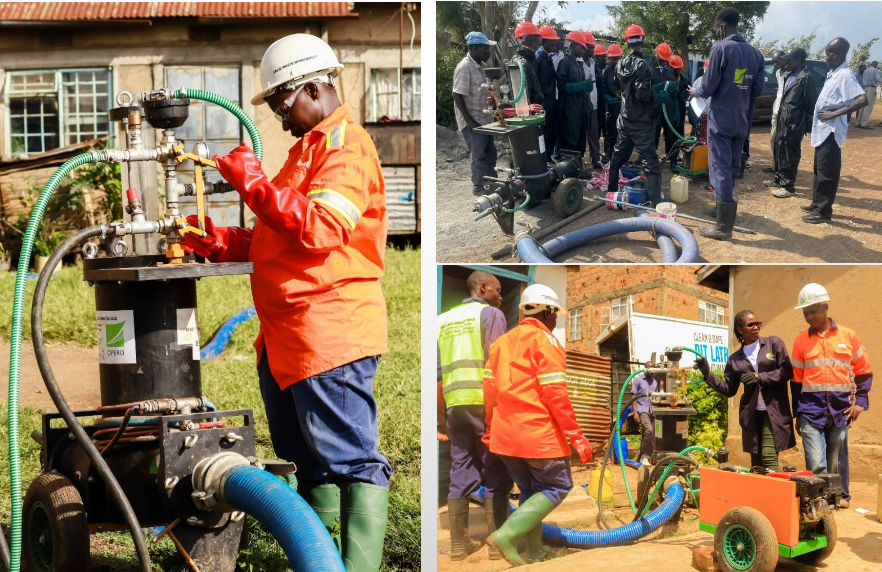
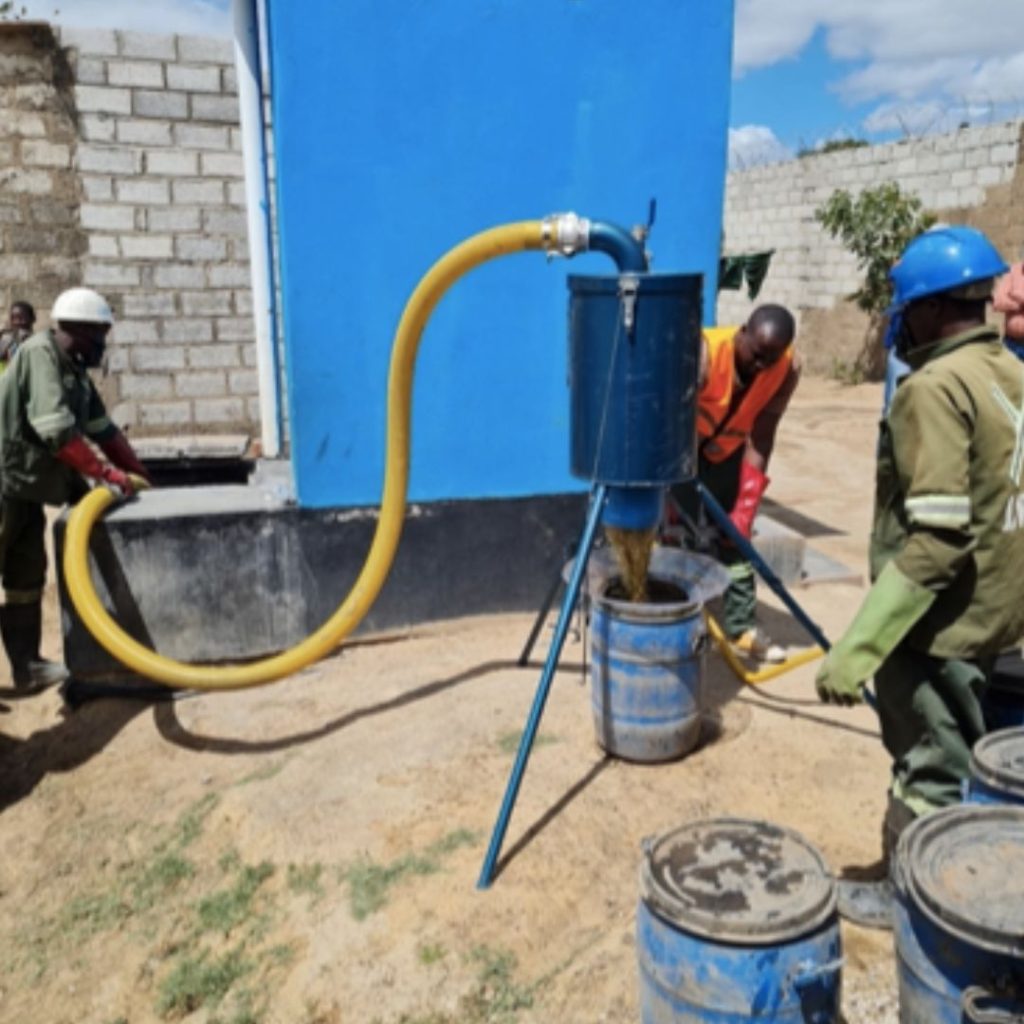
Pit Emptying Equipment
In Kigali, the provision of fecal sludge collection and transportation services is done by the private sector. According to RURA’s regulation, manual emptying (i.e. entering the pit and using traditional tools like shovels) is prohibited. Only portable pumping is permitted in areas where exhauster trucks can’t reach. In 2019, private sanitation service providers organized themselves into an association known as the Association of Exhauster Service Providers in Rwanda (Asserwa). Asserwa consists of three distinct groups: exhauster truck operators (13 VTOs), manual emptiers (6 members), and builders (3 members). The association serves as a forum that advocates for a better business environment and promotes proper sanitation through appropriate fecal sludge management. To date, only 8 of the VTOs are legally licensed to provide faecal sludge collection and transportation services.
Service Provision in Accessible Areas
In Kigali, fecal sludge management (FSM) services in accessible areas are primarily provided by vacuum truck operators (VTOs). These operators serve households, institutions, and commercial entities located in areas with road access and where residents have the financial means to afford these services. Key service providers in these areas include companies such as Sewage Technology Ltd, Kanguka Business Company Ltd, Medas Spare Parts and Services Ltd, and others, each owning multiple trucks to cater to their clientele. These trucks are capable of handling large volumes of waste, with some trucks able to collect up to 20 000 liters per trip. Despite the efficiency of vacuum trucks, operators face challenges such as high operating costs, particularly due to fuel expenses and the time-consuming nature of traveling between clients and the Nduba dumpsite for waste disposal.
Service Provision in Inaccessible Areas
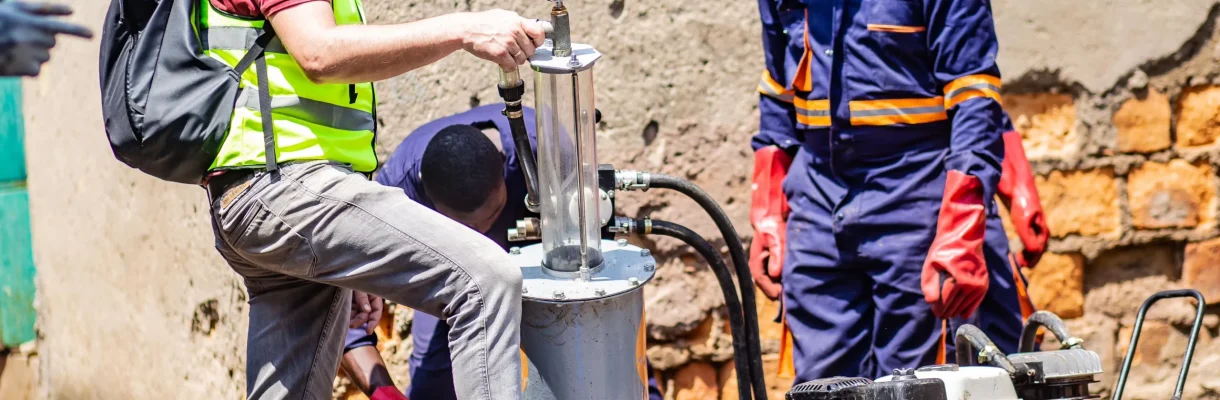
In contrast, FSM services in Kigali’s less accessible areas, particularly those with steep terrain and narrow pathways, are provided by Pit Pumpers Ltd (Pit Vidura) and SANEX Ltd. These companies focus on serving low-income communities that often reside in such hard-to-reach locations. Pit Vidura, for instance, uses a combination of semi-mechanized methods, such as portable pumps (the Pitvaq) and manual labour, to navigate the challenging terrain and narrow pathways (Rutayisire et al., 2021). These methods, while necessary, are labour-intensive and time-consuming, which limits the number of clients that can be served daily and increases operational costs (Wilcox et al., 2023). Although these companies strive to provide formal, safe and hygienic emptying services, there are still many households not served mainly due to the
characteristics of their facilities (unable to be pumped by mechanical pumps) or their being unable to afford the minimum cost of hygienic pit emptying services. These households are served by informal (illegal) service providers who empty manually and bury the sludge contents where land is available.
Treatment and Disposal Facilities
Currently, Kigali lacks a dedicated faecal sludge treatment plant (FSTP). The faecal sludge collected in the city is disposed of at the Nduba ponds, located approximately 17 kilometers northeast of the central business district. These ponds have been in use since 2012, receiving an average of 200 cubic meters of liquid waste per day, equivalent to approximately 10-15 truckloads daily. The Nduba dumping site is open 24/7 and accepts both waste from exhauster trucks and sludge from barrels. The Nduba ponds lack essential features such as a bottom liner, a leachate collection system, and proper treatment facilities, leading to potential groundwater contamination and occasional waste overflows into the surrounding community.
To address these issues, a new FSTP is planned for construction in Masaka. This plant will initially have a capacity of 500 cubic meters per day, which will eventually be expanded to 1 000 cubic meters per day. The completion of this plant is expected to lead to the closure of the Nduba ponds. Additionally, a sewage treatment plant at Gitikinyoni is planned to support wastewater treatment for areas such as Nyarugenge, Muhima, and parts of Kimisagara.
Kigali also has some semi-centralized treatment plants, particularly in residential estates, hotels, and industrial zones. These facilities treat wastewater using Sequencing Batch Reactors (SBRs). However, not all are operational, and some continue to rely on vacuum trucks for sludge removal. Despite these ongoing efforts, Kigali still faces a knowledge and skill gap in effectively treating faecal sludge, along with challenges related to the high costs and lack of necessary equipment for installing and maintaining small- scale treatment (WASAC, 2020).