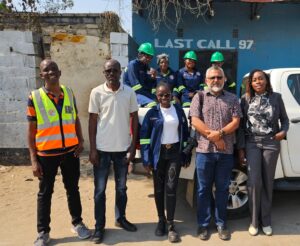
The Faecal Sludge Management (FSM) Action Research Project is a three-year programme (November 2023 – October 2026) designed to understand how faecal sludge emptying and transport services can be made safer, more efficient, and financially sustainable in cities that rely on on-site sanitation.
The study compares six emptying technologies which include Pitvaq, PuPu Pump, Trash Pump, Gulper 1, manual and improved manual, —under real working conditions in four cities: Lusaka (Zambia), Kigali (Rwanda), Kampala (Uganda), and Kisumu (Kenya).
Implementing partners include:
Lusaka: (CaDev) Catalyst_Development
Kigali: Pit Vidura
Kampala: SSWARS-iC
Kisumu: Opero Services
Research partner: University of Washington
Each city operates through a Project Steering Committee linking the utility, the emptiers’ association, and the sanitation authority. This newsletter aims to give an update on the project to November 2025, more details can be found on our website: https://fsmaction.org/
This newsletter shares our progress to October and November 2025 .
STUDY COMPONENTS
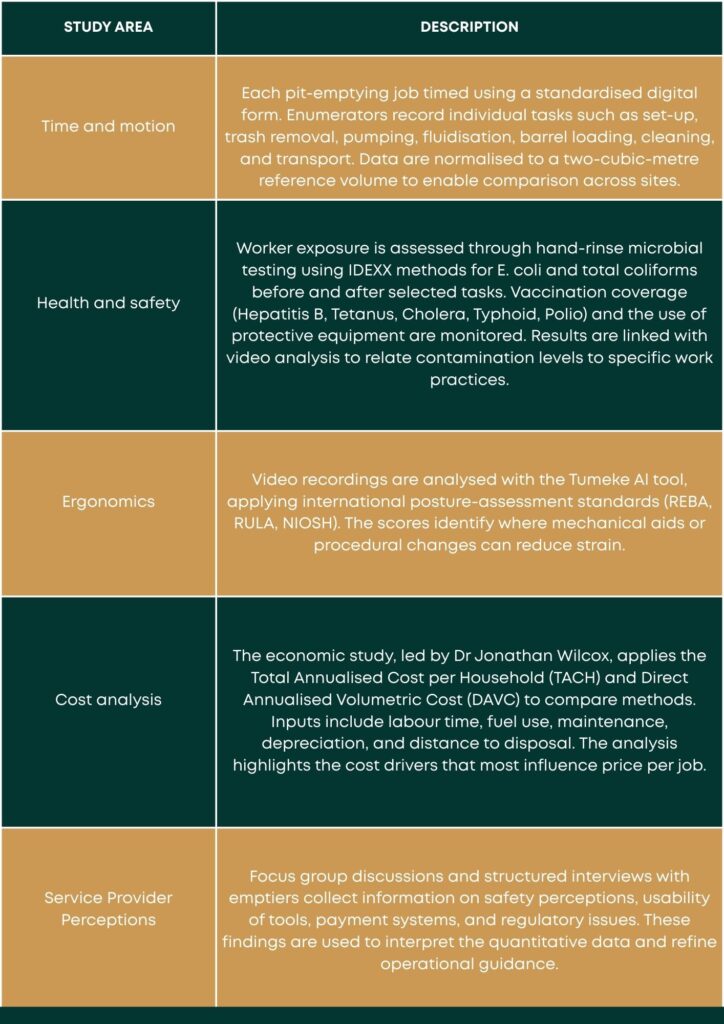
The project combines field observation, laboratory testing, and cost analysis to produce comparable evidence on the performance, safety, and affordability of different faecal sludge emptying methods. All city teams follow a research protocol approved by Institutional Review Boards in each country.
There are 5 key areas of assessment – time and motion (speed of each task); health and safety (exposure); ergonomics; cost and service provider experience. The goal is to use these insights to design long term emptying frameworks for each location.
PROGRESS TO DATE (October 2025)
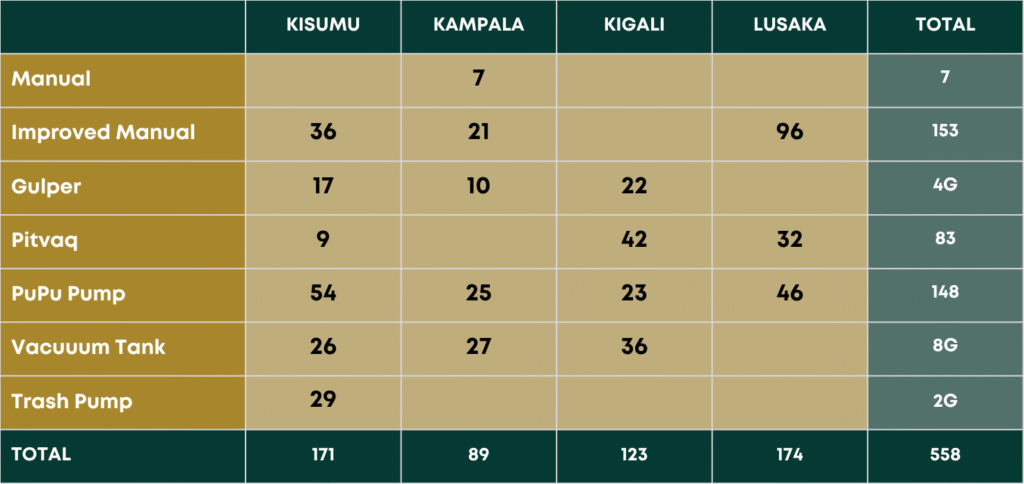
By October 2025, more than half of the planned observations had been completed across the four cities. Data from over 500 jobs are now being processed to identify trends in efficiency, health protection, and cost.
Pit Emptying Oberservation
Table 1. Summary of observations to 30th September, 2025.
Operational Efficiency
Key insights on operational efficiency include:
Performance varies mainly by pit depth, sludge type, and site access.
Average duration for a two-cubic-metre pit: 45 to 90 minutes.
Lusaka shows the shortest time currently, evidend by the improved manual methods used, team efficiency’s and the characteristics of pits selected for emptying.
Kigali and Kampala record longer times because of deeper pits and slower set-up.
Within cities, improved manual and semi-mechanised methods perform similarly, confirming that organisation and logistics are as critical as the technology itself.
Cost and Economic Insights
Early financial data show that transport and logistics are the main cost drivers.
Kigali: use of a mobile transfer station reduced barrel haulage costs by about 34 %.
Lusaka: modelling suggests that a scheduled desludging system costing roughly two dollars per household per month could be commercially sustainable.
Kampala and Kisumu: cost variation is driven by distance to the disposal site and truck utilisation rather than pump type.
Health and Safety
Most emptiers have received protective gear, and vaccination coverage is ongoing; remaining workers in Kisumu are scheduled to complete vaccination in December.
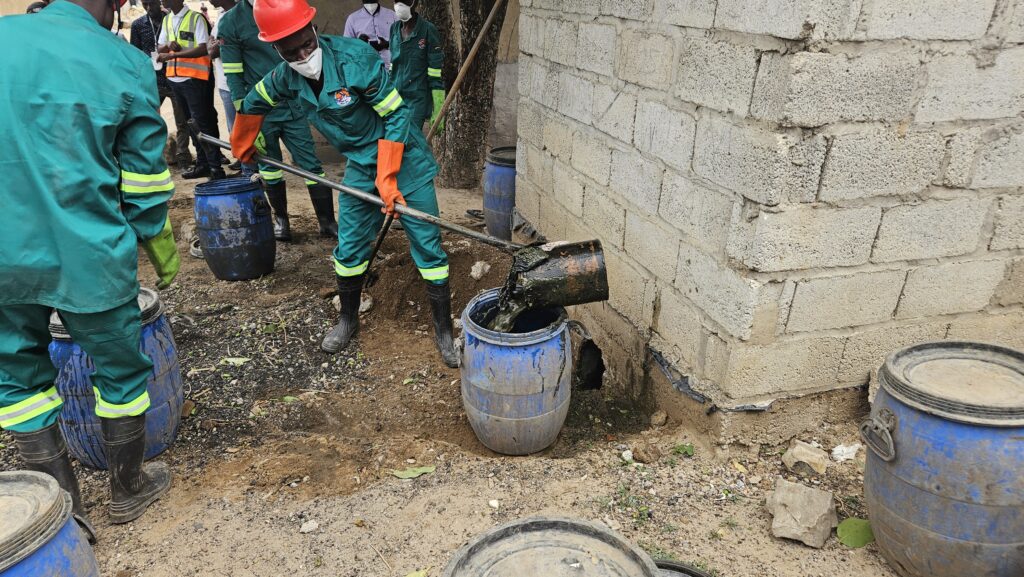
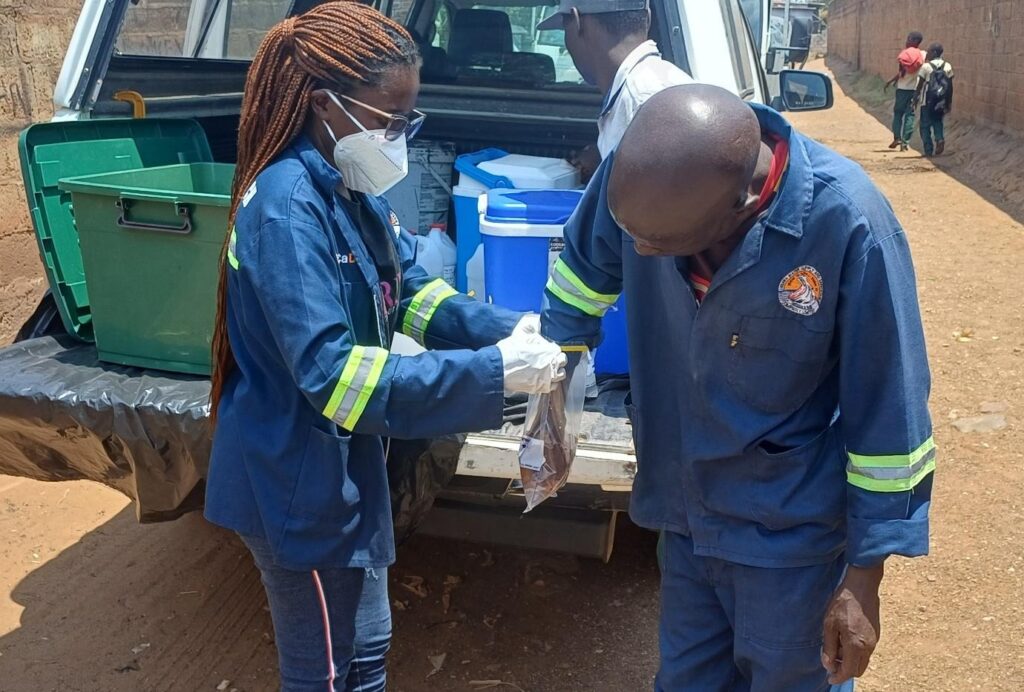
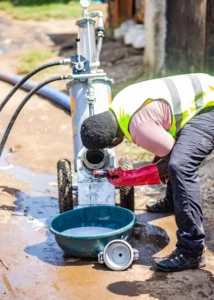
Hand-rinse testing shows wide variation in contamination across tasks, reinforcing the need for consistent glove use and access to hand-washing facilities.
Across the cities, plans are at varying stages to establish depots with wash bays, showers, and equipment storage to improve the working environment and reduce occupational risk.
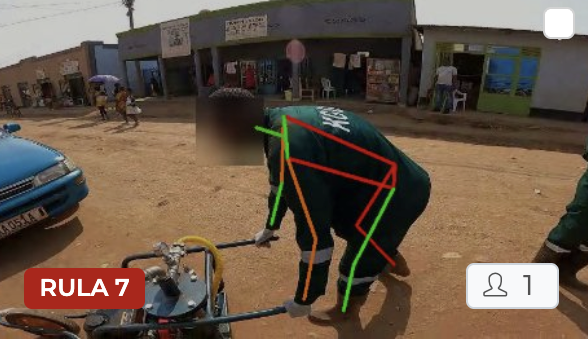
Ergonomic analysis identifies barrel lifting as the primary source of physical strain.
Figure 2. Hand rinse sample collection
Figure 3. Ergonomics emptiers posture
CITY HIGHLIGHTS
Each city’s context shapes the technologies used, the institutions involved, and the lessons emerging.
Lusaka, Zambia – Dense Settlements and Early Scheduled Desludging
Lead organisations: Lusaka Water Supply and Sanitation Company (LWSC), Catalyst Development (CaDev), Zambia Emptiers Association (ZEA).
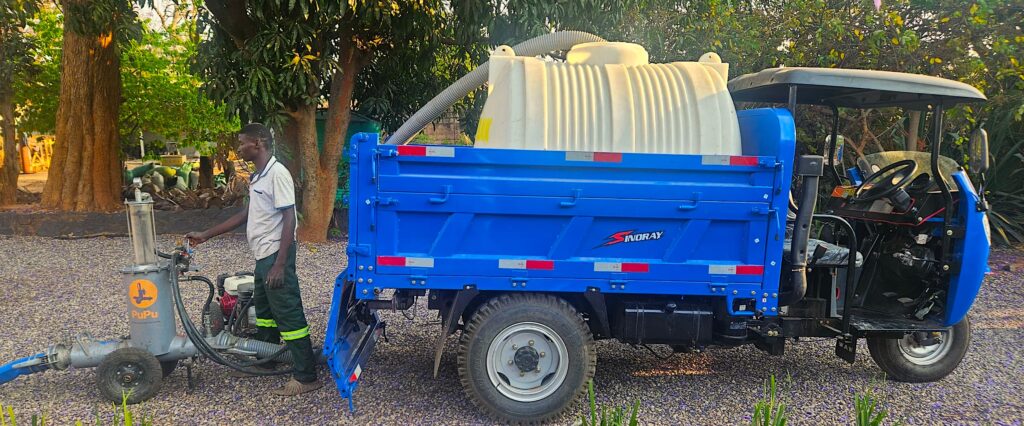
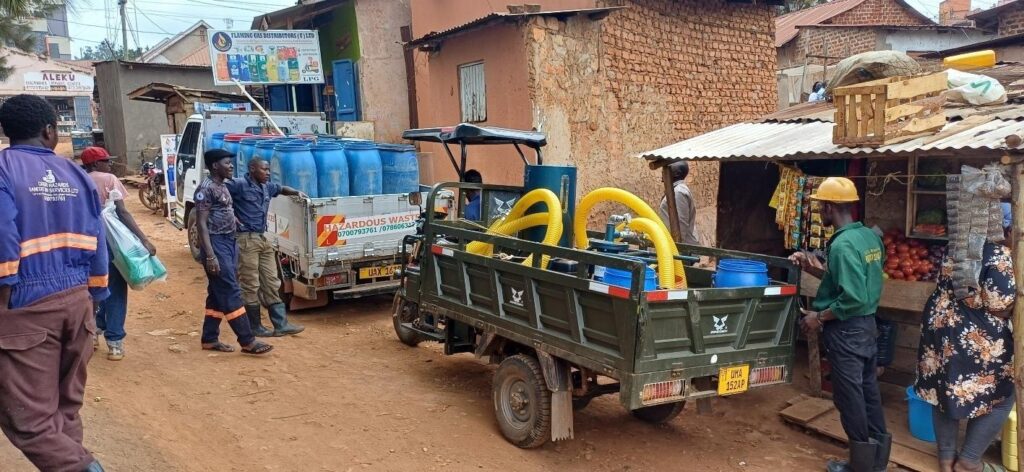
Lusaka has extensive experience from the Lusaka Sanitation Programme , including a history of improved manual emptying’ and access to faecal sludge treatment plants {FSTPs). Safe emptying is especially required here due to high groundwater levels and the associated risk of cholera. A three-wheeler equipped with a two-cubic-metre tank has been purchased to use in unplanned settlements to understand how transport configuration affects efficiency.
Figure 4. Three tone Three-wheeler with a 2 cubic tank
Kigali, Rwanda – Regulated Environment and Transfer Systems
Lead organisations: Water and Sanitation Corporation (WASAC), Pit Vidura, Association of Sewage Emptiers in Rwanda (ASSERWA). Manual emptying is prohibited in Kigali, so licensed operators historically use PitVaq and vacuum trucks. Portable pumps are effective on steep terrain. Kigali has a single disposal point which is outside the city boundaries and takes some time to access. The use of mobile transfer stations has been found to reduce haulage costs by about one-third- Stakeholder workshops improved awareness of safe work practices and business performance monitoring.
Kampala, Uganda – Established Market and Data-Led Refinement
Lead organisations: Kampala Capital City Authority (KCCA), SSWARS-iC, Gulpers Association of Uganda. Kampala has the most developed private emptying market with more than 170 vacuum trucks a large association of Gulper entrepreneurs. Waste is transported in barrels and mechanized equipment occupies valuable space. For now, it is delivered to site using a tuk tuk. Integration of emptiers into the city’s inclusive sanitation framework provides a strong governance model.
Kisumu, Kenya – High Water Table and Utility-Integrated Model
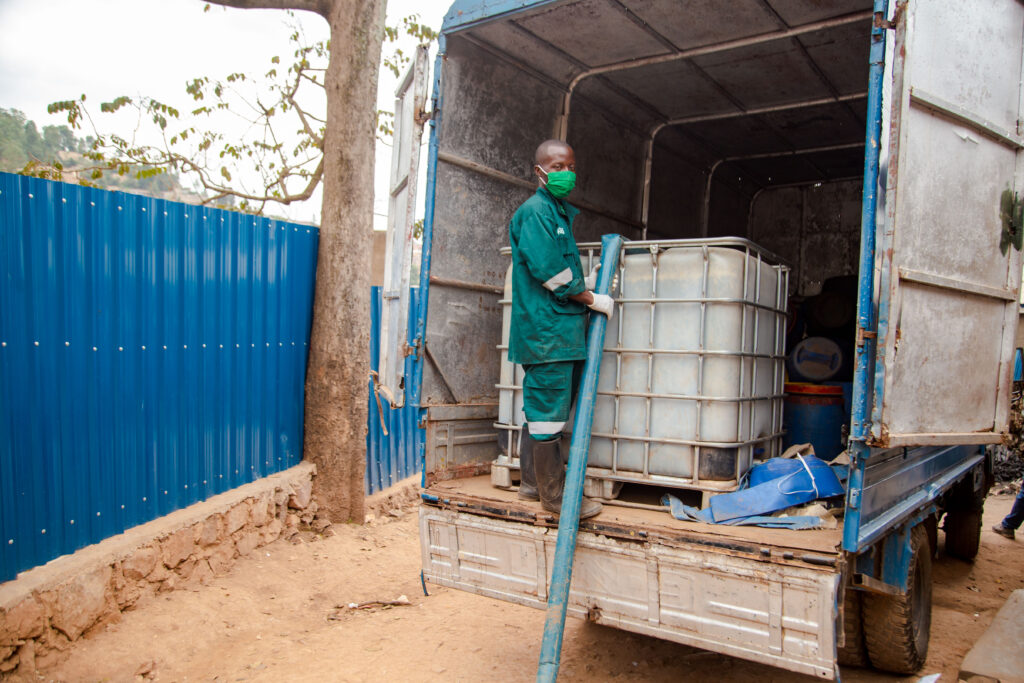
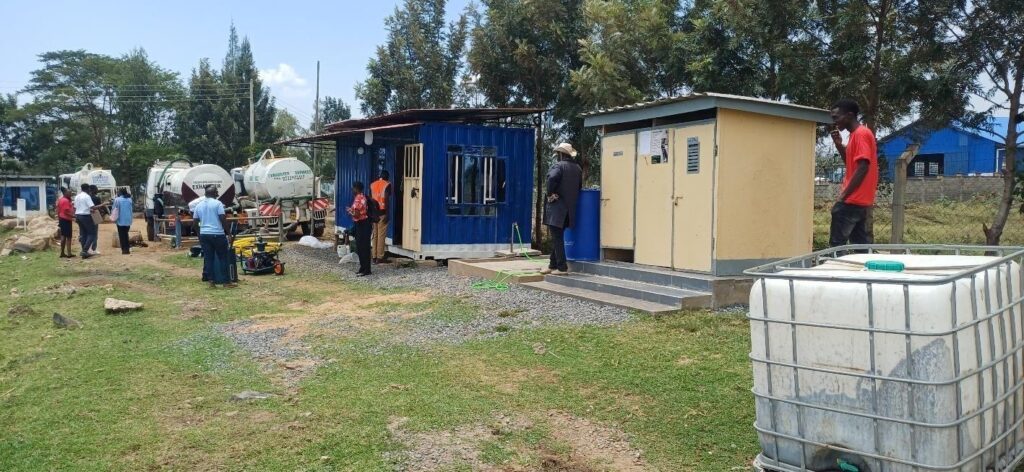
Lead organisations: Kisumu Water and Sanitation Company (KIWASCO), Opero Services, Kenya Association of Wastewater Managers (KAWAWAMA). Kisumu’s high groundwater levels and frequent flooding make pumping essential. KIWASCO manages emptier coordination and disposal operations. A new wash bay and toilet block at the sludge lagoons provide safe cleaning space for workers. The PuPu Pump has halved average job time in flooded areas. Trials with one-thousand-litre tanks are under way to improve haul capacity.
EMERGING TECHNICAL LESSONS
Performance is determined by local conditions. Pit depth, sludge consistency, and accessibility have a stronger influence on job duration and cost than the choice of technology. In dense, low-lying settlements, shallow pits with watery sludge favour small portable pumps, while deeper or drier pits often require a mix of pumping and manual removal.
Improved manual methods remain highly relevant. When workers are properly equipped and trained, improved manual tools can match the productivity of semi-mechanised systems, particularly where the volume per job is small or access for machinery is restricted. Cities should therefore maintain a mix of service options rather than assuming mechanisation alone will meet demand.
Transport configuration drives financial performance. The type and size of vehicle, number of trips to the disposal site, and the use of intermediate transfer points explain most cost variation. Small trucks, barrel trolleys, and three-wheelers have proved cost-effective for short hauls and dense neighbourhoods.
Health and safety systems deliver rapid benefits. Standardised protective equipment, vaccination, and designated worker facilities reduce exposure and spillage almost immediately. Consistent enforcement of these systems has proven more effective than occasional training or one-time equipment provision.
Consistent data protocols build credibility and comparability. Using uniform digital tools, observation templates, and microbial testing methods across all cities allows direct comparison of performance and exposure. This approach strengthens evidence for utilities and regulators developing service standards and investment plans.
NEXT STEPS (2025-2026)
The next phase will complete data collection and merge efficiency, cost, and health results to produce practical recommendations for city authorities and service providers. Planned activities:
Complete approximately eight hundred total observations.
Merge datasets on time, cost, microbial exposure, and ergonomics.
Field-test trolleys and lifting harnesses to reduce physical strain.
Develop city-specific business and scaling models with utilities and emptier associations.
Publish the Comparative Technical Report in 2026 and present results at AfricaSan 7, FSM 7, and other regional forums.