
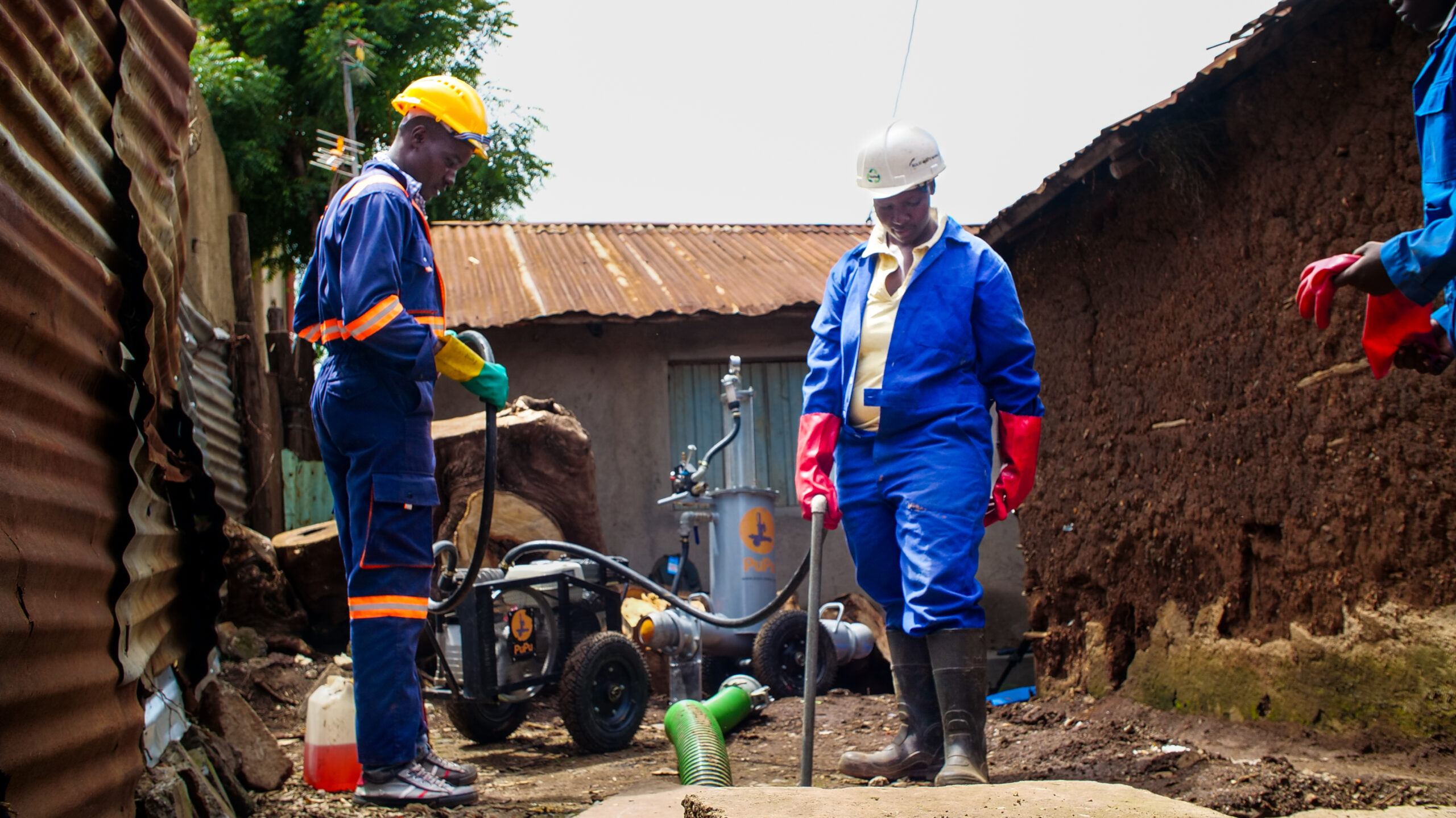
Kisumu’s sanitation landscape consists of dense low-income settlements and peri-urban areas where accessibility, settlement density, high water table and transport distance to treatment facilities strongly influence pit emptying operations.
- The emerging message from Kisumu is that service delivery is unlikely to rely on a single technology.
- The Pupu Pump and Trash Pump appear most useful in wetter, pumpable pits, while manual and improved manual methods continue to play an important role where sludge is thick, consolidated, or contains high levels of solid waste.
- A practical mix of manual, semi-mechanized, and vacuum tanker services is required to meet the city’s diverse sanitation needs.
- Accessibility and sludge conditions are the primary drivers of technology selection.
Context and Challenge
With a population of 519,909, and approximately 95% of residents relying on on-site sanitation, Kisumu’s sanitation landscape consists of dense low-income settlements and peri-urban areas where accessibility, settlement density, high water table and transport distance to treatment facilities strongly influence pit emptying operations. The city has a well-established manual emptying sector, with activity concentrated in dense settlements and areas where vacuum trucks cannot always access households.
The Pupu Pump was already in use in Kisumu before the project, and the research is now comparing its performance with the Pitvac, Trash Pump, Gulper 1, manual emptying, improved manual emptying, and vacuum truck operations.
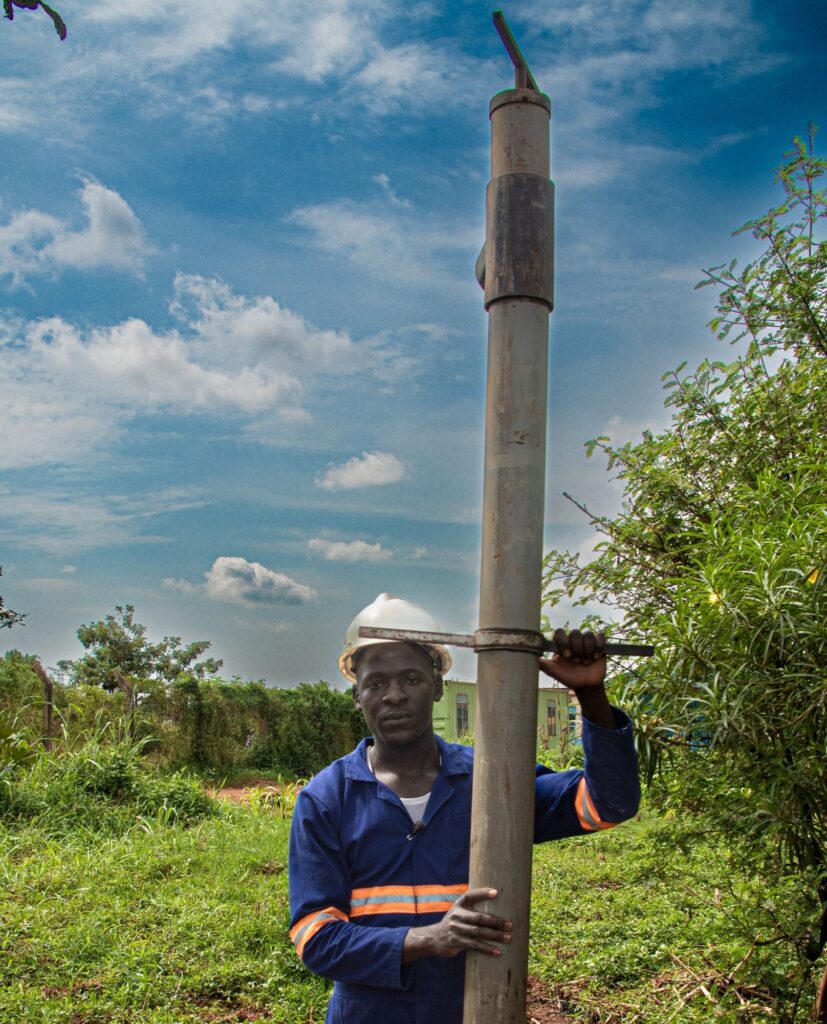
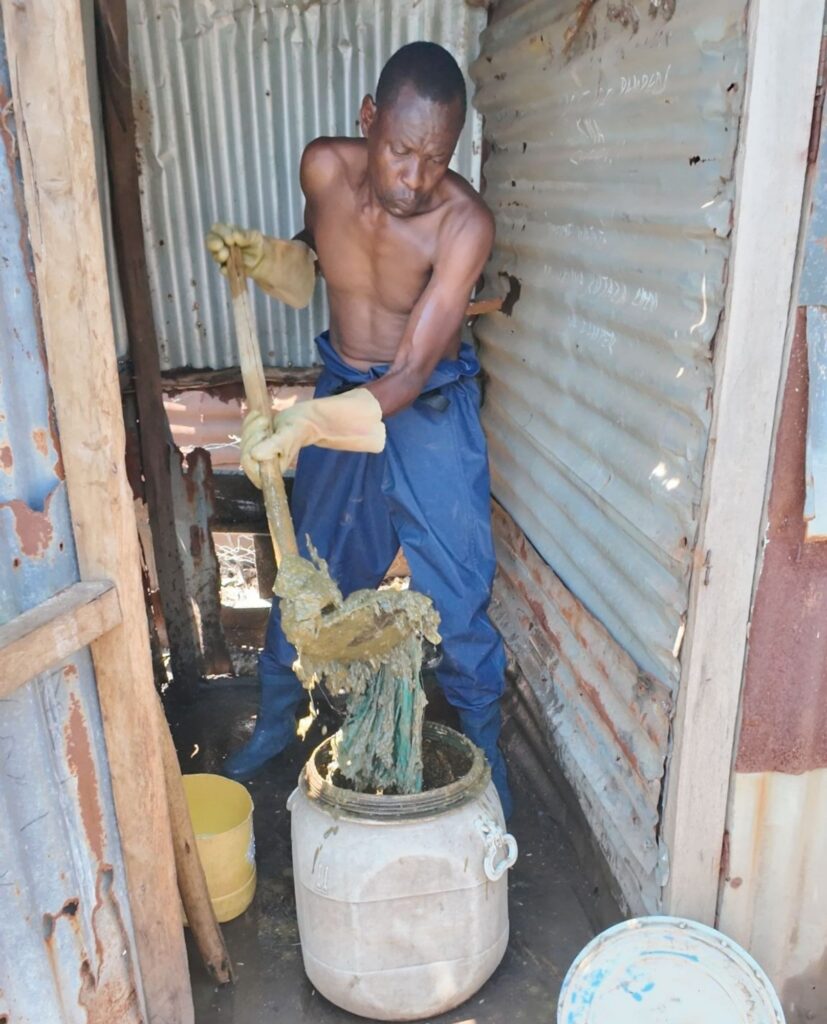
A total of 170 pit emptying operations were observed across the city, supported by time-and-motion studies, health and safety observations, and video-based ergonomic assessments.
Semi-mechanized technologies such as the Pupu Pump and Pitvac were widely used in hard-to-reach areas, while vacuum trucks dominated accessible routes. Manual and improved manual methods remained important where mechanized access was limited or where sludge conditions made pumping difficult.
The map below illustrates the spatial distribution of pit emptying technologies across Kisumu based on the collected dataset. It highlights how key factors such as accessibility, settlement density, and distance to treatment facilities influence technology choice.
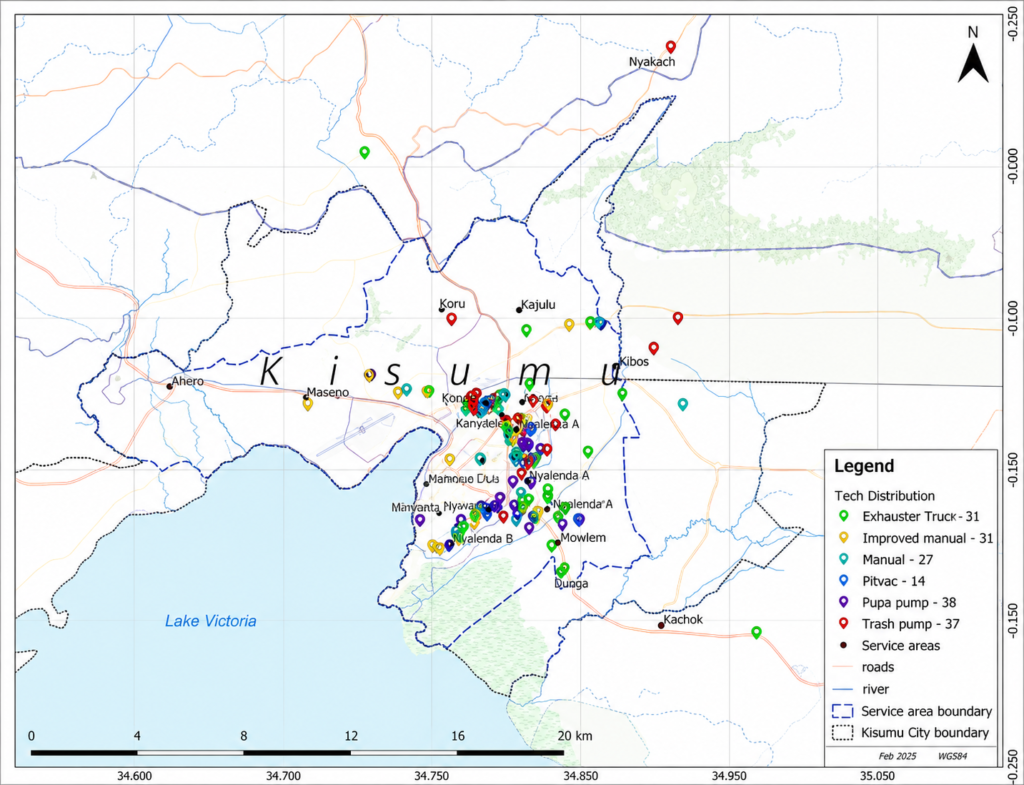
Figure 3. Spatial distribution of pit emptying technologies across Kisumu
Emerging Operational Points
Early field experience suggests that no single technology is suitable for all contexts. The Pupu Pump and Trash Pump appear most relevant in wetter, pumpable pits, while manual and improved manual methods continue to play an important role where sludge is thick, consolidated, or contains high levels of solid waste.
The emerging message from Kisumu is that service delivery is unlikely to rely on a single technology. Instead, a practical mix of manual, semi-mechanized, and vacuum tanker services is required to meet the city’s diverse sanitation needs. Accessibility and sludge conditions are the primary drivers of technology selection.
| Technology Jobs recorded | Technology Jobs recorded |
| Trash pump | 59 |
| Improved manual emptying | 90 |
| PuPu Pump | 80 |
| Pitvac | 27 |
| Vacuum truck | 57 |
| Total | 313 |
Table 1. Jobs recorded per technology in Kisumu
Pingback: FSM Action Research Project Newsletter: Issue 2 – FSM Action Research Project