Comparing technology use – a research update across four cities
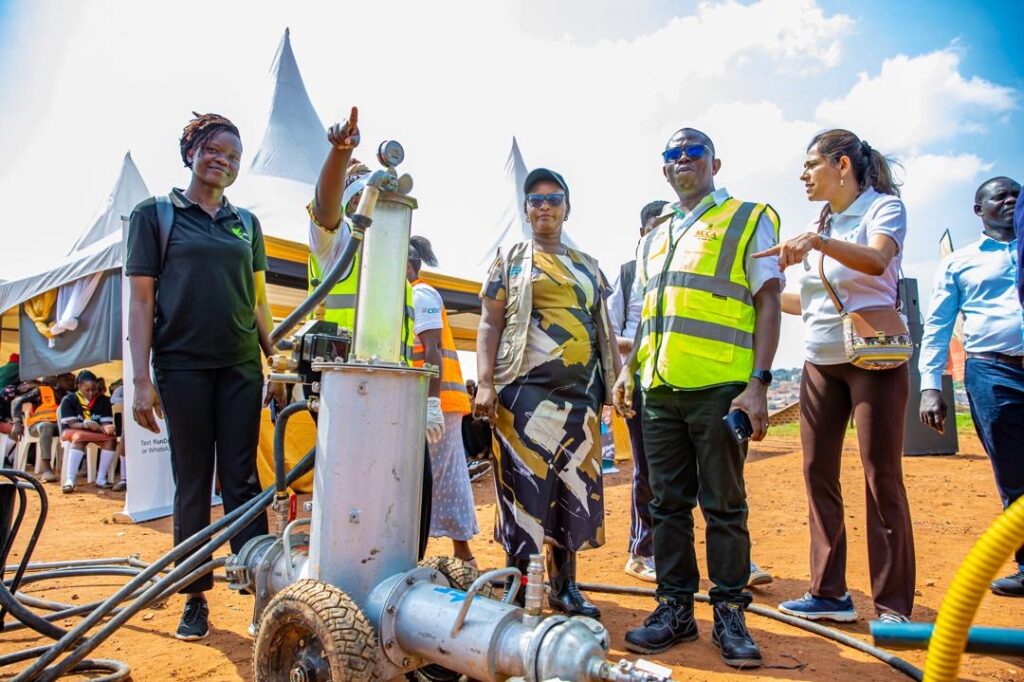
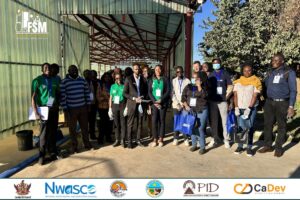
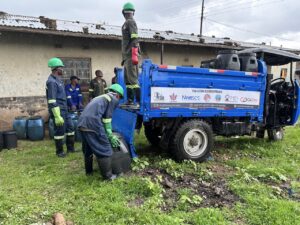
Over the past 12 months, the FSM Action Research Project team conducted fieldwork across four cites: Lusaka (Zambia), Kigali (Rwanda), Kampala (Uganda), and Kisumu (Kenya), recording detailed time-and-motion metrics and health and safety observations across different pit emptying technologies.
Now we are focusing on:
- Data cleaning and analysis across all four cities
- Comparative assessment of cost, efficiency, and safety across technologies
- Development of business and service models to support scaling
- Continued stakeholder engagement to translate findings into practice
In this issue we will provide more insight on some of the technologies used and their operational fit in each city, highlighting the conditions where each technology works best.
Background
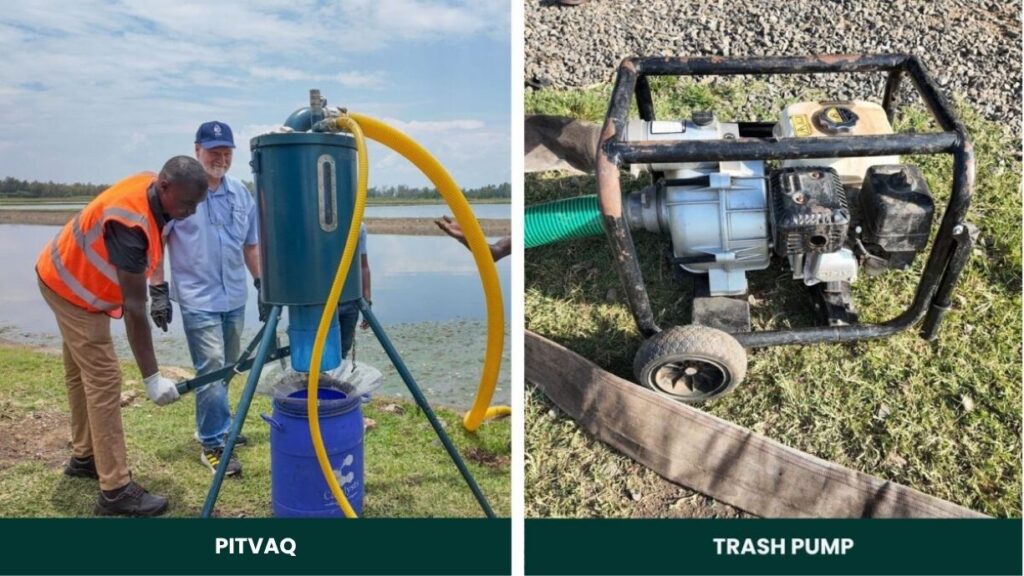
The study compares emptying technologies, including: Pitvaq; PuPu Pump; Trash Pump; Gulper 1; Gulper 4 (in Kigali only for now); vacuum trucks; manual and improved manual. The technologies are observed under real working conditions to understand how operations can be made safer, more efficient, and more financially sustainable in cities that rely on on-site sanitation.
In total, more than 240 pit-emptying operations were documented in Kisumu, 150 in Kampala, 198 in Kigali and 245 in Lusaka covering a wide range of settlement types and operational contexts.
TIME AND MOTION MEASUREMENT
How did we measure?
There are five key measurements in the time and motion component of the study; these have been captured by sending enumerators to the field with the emptying teams who measure the time taken for each component.
| Task | Description |
| Set-up | The initial activity on arrival at the site. Equipment and tools are unloaded, assembled, and positioned adjacent to the facility in preparation for emptying. |
| Solid waste removal | Typically the second activity, particularly in facilities with significant accumulations of solid waste. Non-faecal materials such as plastics and other debris are removed to prevent obstruction of the pumping equipment. |
| Sludge pumping | The principal activity, in which a pump is used to extract faecal sludge from the pit and transfer it into barrels or holding tanks. |
| Barrel loading and transport | Following pumping, the filled barrels are returned to the vehicle and secured for transport to the designated discharge site. |
| Demobilisation and site cleaning | The final activity before departure. Tools and equipment are disassembled, cleaned, and loaded onto the vehicle, and the site is restored to a clean condition. |
Overview of Pit Emptying Technologies
The table below summarizes the key specifications of the pit emptying technologies deployed and observed across the study cities, including their operational characteristics and suitability under different field conditions.
| PuPu Pump | Pitvaq | Trash Pump | |
| Suction depth | 8 metres | 7 metres | 4 metres |
| Delivery hose | Yes | No | Yes, up to 50 metres |
| Operating pressure | 2.5 bars | Not applicable | 1-3 bars |
| Advantages | Long pumping distance (up to 100 m) No barrel handling, reducing exposure Handles thick and semi-solid sludge with moderate trash content | Fast pumping Effective for thick sludge Suitable for hard-to-reach areas Lighter than Pupu pump and takes up less space | Simple and relatively low-cost High pumping capacity Can pump over moderate distances (up to ~50 m) Works well for watery sludge |
| Disadvantages | Longer setup time Higher capital cost Requires a receiving tank for containment of the waste | Requires barrel handling and transport Limited tolerance to solid waste | Cannot handle thick sludge or high trash content Prone to clogging from solid waste |
| Gulper 1 | Gulper 4 | Vacuum trucks | |
| Suction depth | 2 metres | 2 metres | 6-8 metres |
| Delivery Hose | 1 metre | 3 metres | Delivery via onboard vacuum truck system |
| Operating pressure | Not applicable | Not applicable | Not applicable |
| Advantages | Inexpensive. Suitable for thick and viscous sludge with low trash content Best suited for shallow pits and contained emptying operations | Inexpensive. Uses human power more efficiently than the Gulper. Easier to operate. | High-capacity emptying (3,000–10,000+ liters depending on truck size) Suitable for watery, semi-liquid, and low-viscosity faecal sludge with minimal trash content |
| Disadvantages | Awkward to move and operate |
| Manual emptying | Improved manual | |
| Suction depth | No depth limitation | Limited to approximately 1.5 m |
| Delivery hose | No | No |
| Operating pressure | Not applicable | Not applicable |
| Advantages | Least expensive. Suitable for thick, highly consolidated sludge and pits with high solid waste content No risk of technology faults, time delays due to faults or blockages | Inexpensive. Using suitable tools and techniques, workers can remove sludge without entering the pit. |
| Disadvantages | Fully manual operation using buckets, spades and drums High physical labour requirement Workers need to enter pit, which is unhealthy and unpleasant. | Labour intensive. |
CITY HIGHLIGHTS
Different technologies work in different environments and their efficiency depends on a variety of different factors shaped by each city’s context. For each city we’ve focused on some of the lessons emerging.
Focus on Lusaka
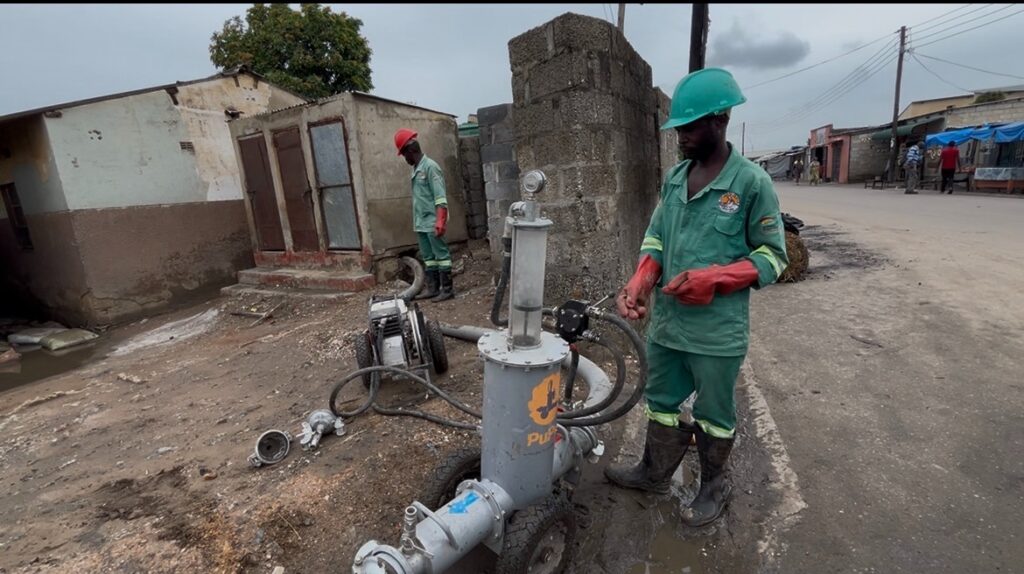
Lusaka’s unplanned settlements are characterized by poorly defined access roads and encroachment on road reserves. These access constraints, together with mixed containment types, influence technology choice. When comparing the Pupu pump (a new technology for Lusaka) and the Pitvaq system, the following observations were made:
- The Pupu pump enabled operators to park up to 100 metres away while maintaining access to pits through hose systems, reducing manual handling and improving efficiency.
- The technology significantly reduces the risk of water contamination, particularly during flooding in the rainy season.
- The Pitvaq performed efficiently in wet pit conditions and emptied pits faster than manual methods, but remained dependent on barrel-based sludge transfer, increasing handling requirements.
- Spillage can occur during discharge into barrels, and together with barrel-cleaning practices, may contribute to environmental contamination, particularly during rainy seasons.
Focus on Kigali
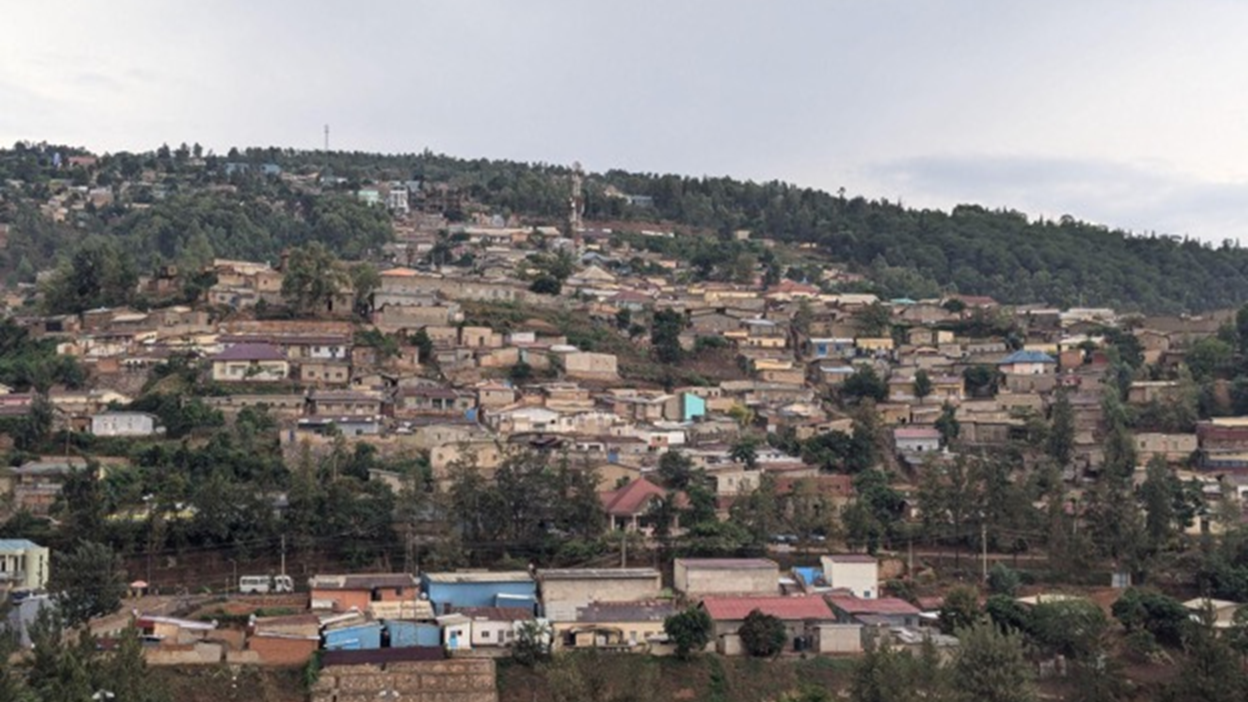
Kigali is characterized by hilly terrain and dense informal settlements, where around 60% of residents live in hard-to-reach areas. Exhauster trucks are often unable to reach households and the hilly terrain limits how far these trucks can pump.
- Among the technologies tested, the Pitvaq and Gulper 4 performed best in these hard-to-reach areas. Both pump faecal sludge into barrels that workers can carry by hand to the nearest accessible point, allowing them to serve homes well beyond the range of a truck or the PuPu pump.
- In one extreme case, a Pitvaq emptied a pit 500 metres from the nearest truck access — a distance that would have left the household unserved by any truck-based method.
- Where possible, the preference would be for the exhauster truck or Pupu Pump as it reduces barrel carrying and physical effort. Technologies that enable direct pumping to trucks with minimal setup consistently rank higher. But in hard-to-reach areas, the Pitvaq is preferred over the Gulper.
- Our research in Kigali shows that technology performance cannot be judged by pumping time alone. In hard-to-reach areas, set-up time, barrel carrying, transfer arrangements, and travel distance to disposal sites can be as important as the emptying technology itself.
- Pitvaq appears to be an important technology in Kigali, but its efficiency depends on the surrounding transport system. Where barrels must be carried or transferred, the full operation needs to be assessed from pit to disposal point.
Focus on Kisumu
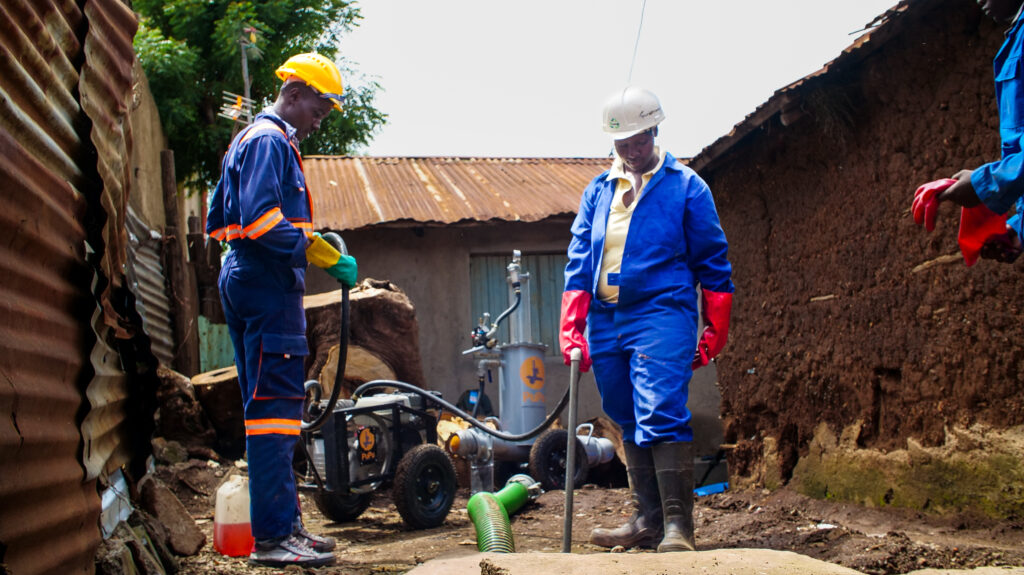
Kisumu’s sanitation landscape consists of dense low-income settlements and peri-urban areas where accessibility, settlement density, high water table and transport distance to treatment facilities strongly influence pit emptying operations.
- The emerging message from Kisumu is that service delivery is unlikely to rely on a single technology.
- The Pupu Pump and Trash Pump appear most useful in wetter, pumpable pits, while manual and improved manual methods continue to play an important role where sludge is thick, consolidated, or contains high levels of solid waste.
- A practical mix of manual, semi-mechanized, and vacuum tanker services is required to meet the city’s diverse sanitation needs.
- Accessibility and sludge conditions are the primary drivers of technology selection.
Focus on Kampala
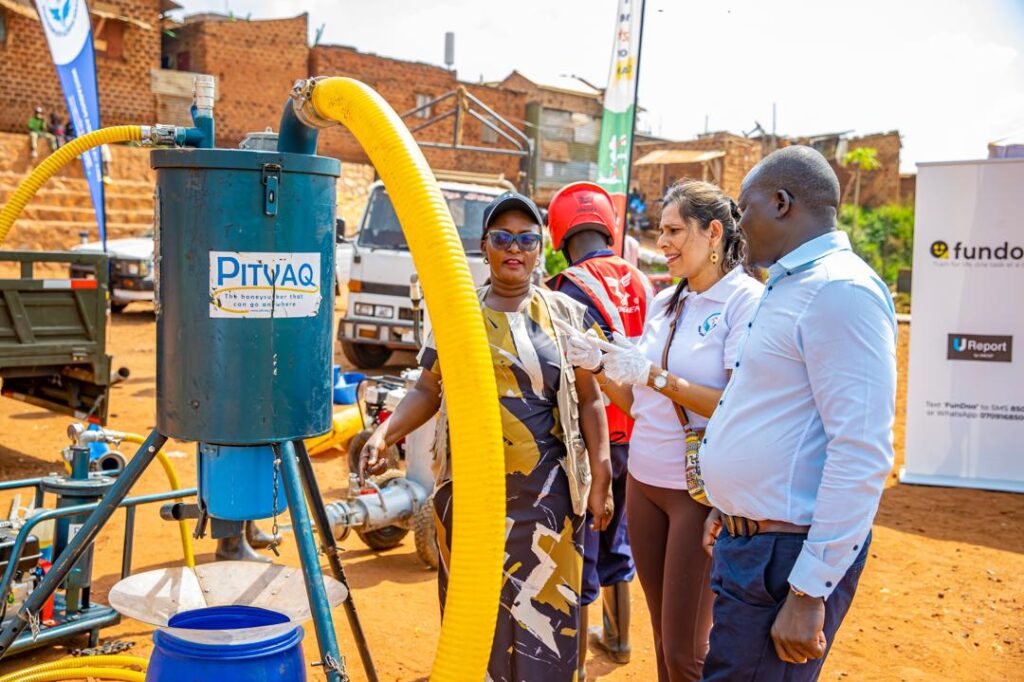
Kampala’s informal and peri-urban settlements present multiple operational challenges, including inaccessible terrain, pits with high solid waste content, congestion at disposal sites, and social stigma among workers.
- Similar to Kisumu, findings from Kampala show that a broad technology package is required as there is no single solution that is sufficient across all contexts.
- Technology selection is shaped by access conditions, containment type, sludge characteristics, and operator experience.
- Mechanical technologies consistently improved job capacity, reduced sludge exposure, and increased efficiency compared to manual methods.
- Vacuum trucks remained important in accessible areas, while the Pitvac was widely used for portable emptying operations.
We will continue to analyse the observations from all four cities and share upcoming publications and case studies on our findings. If you’d like to engage with us further as we translate findings into practice, contact us or follow us on LinkedIn, Facebook and TikTok.
If you received this newsletter from someone and would like to sign up to receive all future issues, click here: