Research in four African cities shows that pit emptiers remain exposed to pathogens, physical strain and other hazards, even when mechanised equipment is used. The findings point to practical ways of reducing these risks that go beyond providing protective clothing.
In Kampala, Kisumu, Kigali and Lusaka, most households are not connected to sewers. Many rely instead on pits and septic tanks that have to be emptied when they are full.
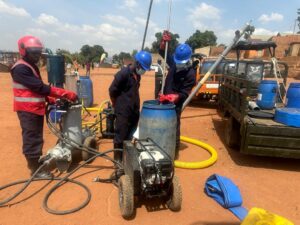
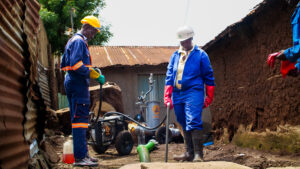
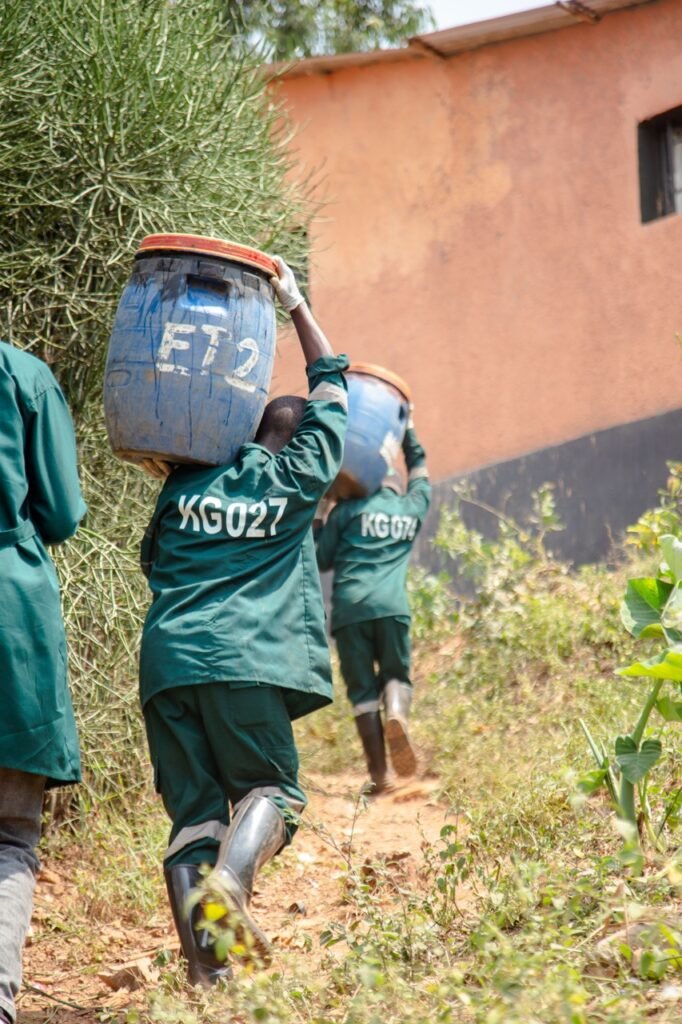
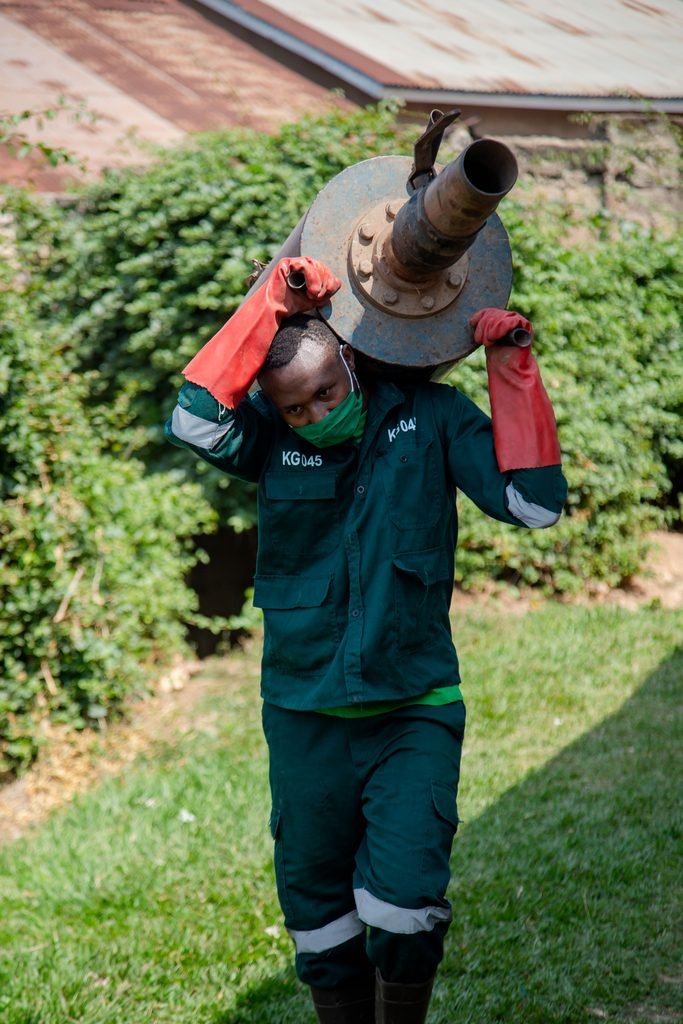
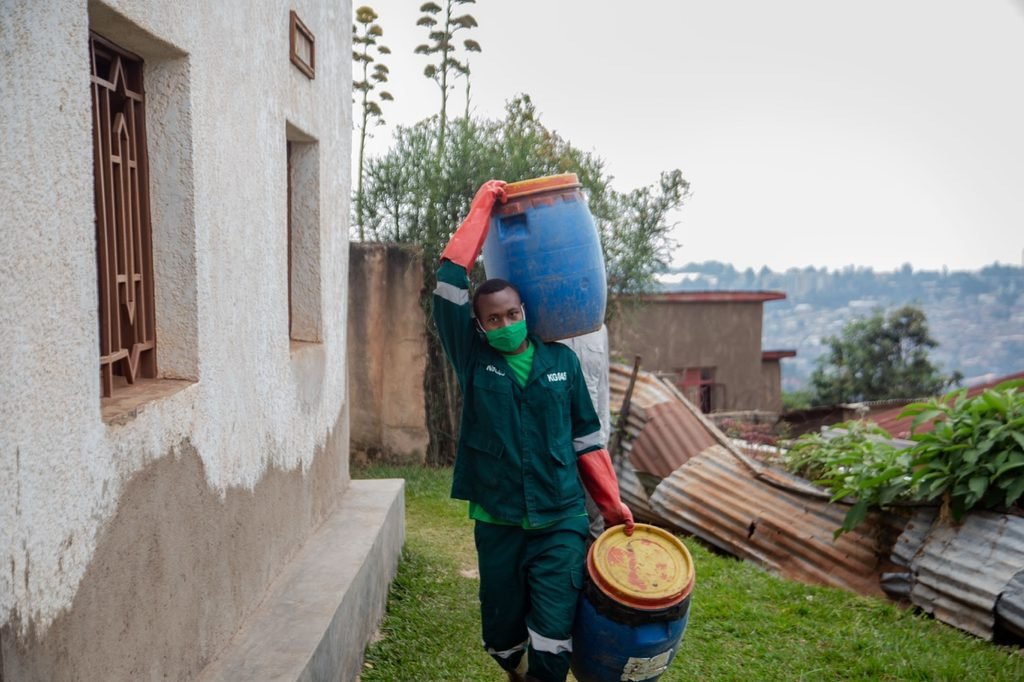
The work can be gruelling. Some workers carry loads of up to 120 litres of faecal sludge up hills, through narrow alleys and across flooded ground. Others use pumps and vacuum equipment. But mechanisation does not necessarily remove the risks. Workers can still be exposed to faecal contamination and the physical demands of handling heavy equipment and sludge.
When cities and service providers choose emptying technologies, the focus tends to be on how quickly and efficiently the equipment can do the job. The occupational health and safety of the people operating it often receives less attention.
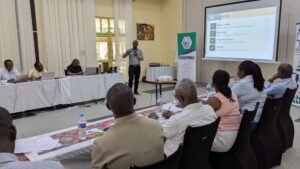
The second webinar in the FSM Action Research Project’s three-part series explored these risks. Researchers working in the four cities investigated microbial exposure, physical strain and the experiences of pit emptiers themselves.
One of the central findings challenges a common assumption: more mechanised equipment does not necessarily mean safer working conditions.
The risks that remain
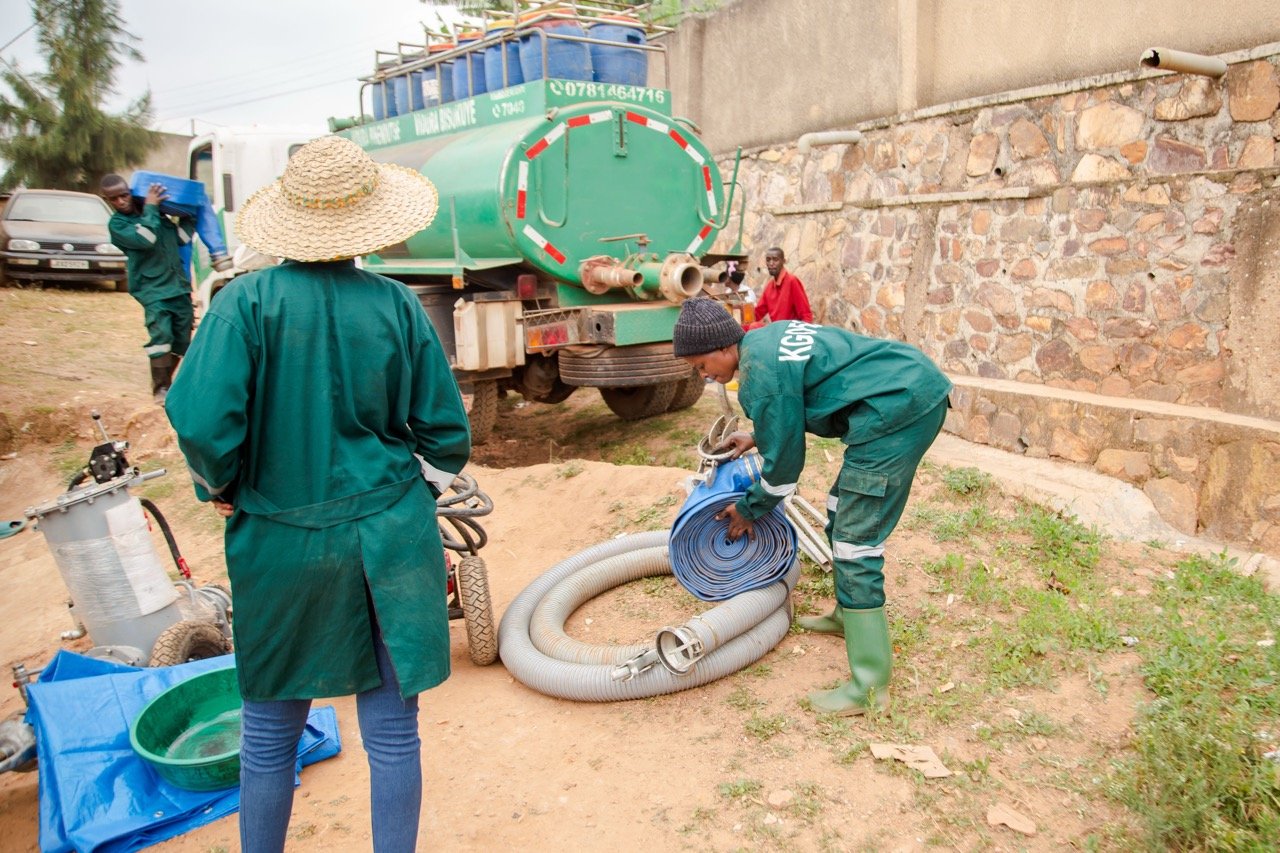
The researchers followed pit-emptying jobs through as many as five stages: setting up equipment, removing solid waste from pits (known as trash fishing), pumping or scooping, transporting barrels, and cleaning and packing equipment afterwards.
To assess microbial exposure, they tested workers’ hands and gloves for E. coli, an indicator of possible faecal contamination. Body cameras recorded how often workers touched their faces, ate or drank during a job.
The researchers also assessed ergonomic risks, including time spent in awkward working positions and the physical demands of lifting and carrying loads. Focus-group discussions allowed workers to describe their working conditions and the hazards they encounter.
Results presented from Kigali showed increased contamination of hands and gloves during every task. Levels were highest during trash fishing, when workers remove solid waste from pits by hand.
Bruce Rutayisire, one of the researchers, said none of the technologies observed eliminated this task. It remained a source of exposure regardless of the equipment being used.
The findings also challenged the assumption that mechanisation automatically reduces contamination. The exhauster truck, the most mechanised option studied, recorded lower contamination during setup. But during other tasks, results were comparable with those for less mechanised technologies.
The reason is partly that some activities remain manual, whatever equipment is used. Workers still have to remove rubbish from pits and clean and pack equipment after emptying.
Body-camera footage revealed another, less obvious source of exposure. Workers touched their faces during every activity and across all the technologies studied. Surprisingly, face-touching occurred most frequently during setup.
The findings suggest that exposure is not confined to the moments when workers handle sludge directly. It can occur throughout the job, including during activities that might appear relatively safe.
Heavy lifting and awkward postures
The physical demands of pit emptying were also evident in the ergonomic findings.
Trash fishing was the task most associated with risky working postures. Workers repeatedly bend and lean over pits to remove solid waste, often pulling against resistance.
The researchers also identified risks linked to particular technologies. When using the PitVaq, workers spent about twice as long in risky postures during pumping as they did with other technologies. Cleaning and packing after using the PuPu Pump presented a similar problem compared with the same task using other equipment.
Lifting and transporting barrels emerged as a wider concern. The researchers used the US National Institute for Occupational Safety and Health (NIOSH) lifting equation to assess the risks. A score above one indicates that a load exceeds the recommended lifting limit for most workers performing the task repeatedly over a shift.
The median score exceeded this threshold in every city. Kampala recorded the lowest median, but it was still above the recommended limit.
Importantly, the lifting risk was not necessarily determined by the technology being used. It depended largely on the size of the barrels and how workers moved them.
Rutayisire identified several relatively simple ways to reduce the risk: use smaller barrels, have two people carry loads over shorter distances, or, where possible, pump sludge directly into a tank.
These measures do not necessarily require replacing existing equipment. They involve changing how the work is organised.
What workers experience
Focus-group discussions in the four cities added a practical perspective to the measurements. Workers described hazards ranging from cuts and splashes to falls, collapsing pits and exposure to dangerous gases.
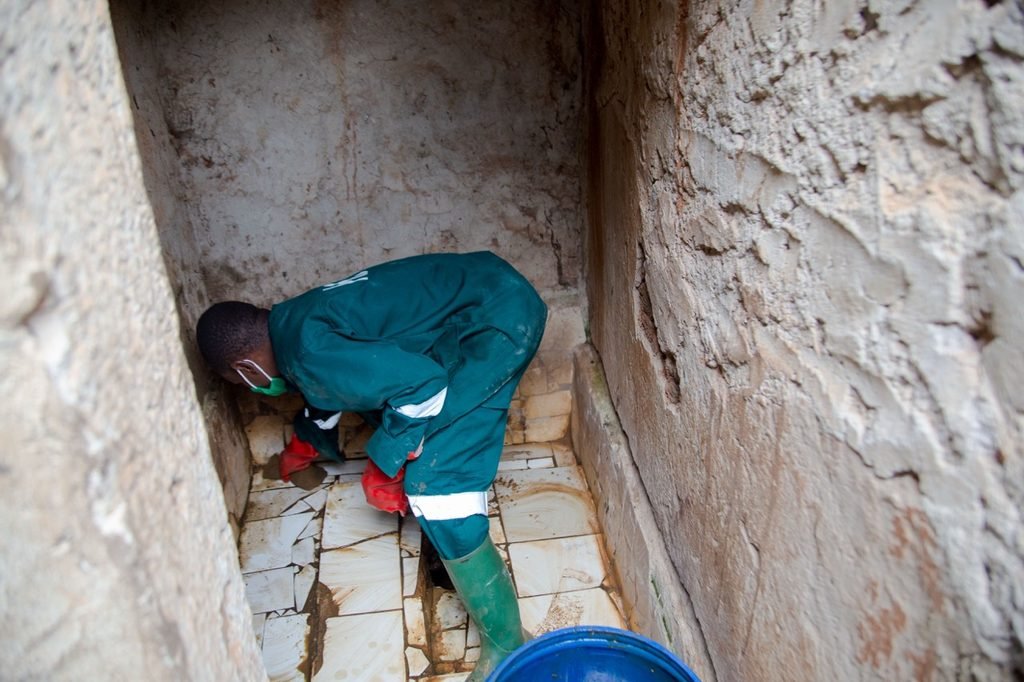
In Kampala and Kisumu, workers reported cuts from sharp objects while removing solid waste from pits. In Kampala, they also described the dangers of entering pits and tanks where poor ventilation and hazardous gases can create a risk of suffocation.
In Kigali, workers sometimes carry barrels for up to 100 metres along narrow alleys, balancing them on their heads or shoulders. They also reported splashes from bursting hoses, overflowing trucks and trash fishing, which can cause skin and eye irritation.
Local conditions create additional hazards. In Kisumu, a high water table and porous soils contribute to unstable, unlined pits. Workers reported pit collapses, while one described a colleague who died after being bitten by a snake sheltering in an abandoned pit.
Lusaka workers also reported collapsing pits and an incident in which a worker fell into a septic tank. Creating access points in pits can expose workers to flying stones and injuries from tools. One described being struck in the eye by a stone, leaving him unable to open it properly for four days.
Workers in Lusaka reported the death of a colleague who allegedly died of cholera after being exposed to sludge during an outbreak.
Protection is uneven
The discussions also revealed examples of support already available, alongside significant gaps in worker protection.
In Kigali, some employers provide personal protective equipment (PPE) and medical insurance. An association of pit emptiers also supplies equipment and offers safety training, although workers said not everyone has access to it.
In Kampala, the city authority licenses pit emptiers and provides training on PPE, vaccination and cholera prevention. But workers said training was infrequent, few participants in the focus groups had been vaccinated, and access to additional protective clothing and first-aid kits was limited.
In Kisumu, some businesses and non-governmental organisations have provided PPE, vaccination and training. A washing bay has also been established at a disposal centre. The city’s water and sanitation utility provides manual emptiers with a free dumping site and helps protect them from harassment by public health officers.
In Lusaka, the utility licenses pit emptiers and facilitates vaccination during cholera outbreaks. It also checks PPE at the faecal sludge treatment plant, although workers said these checks were inconsistent. Much of the equipment and training available to businesses depends on project funding and donations.
Across the four cities, workers raised concerns about inadequate or worn-out PPE, insufficient training and limited access to health checks and medical insurance. When protective clothing is unavailable, some have to work in their own clothes. Women workers in Kisumu reported particular shortages of suitable PPE.
Workers also wanted better access to first-aid kits, spare clothing and, in some cases, ladders to get in and out of pits.
Another recurring concern was the lack of direct communication with the utilities responsible for sanitation services. Workers generally raise problems with their immediate supervisors, but have no reliable way of bringing concerns directly to utilities or other authorities when the problem lies with their employer.
Why PPE is not enough
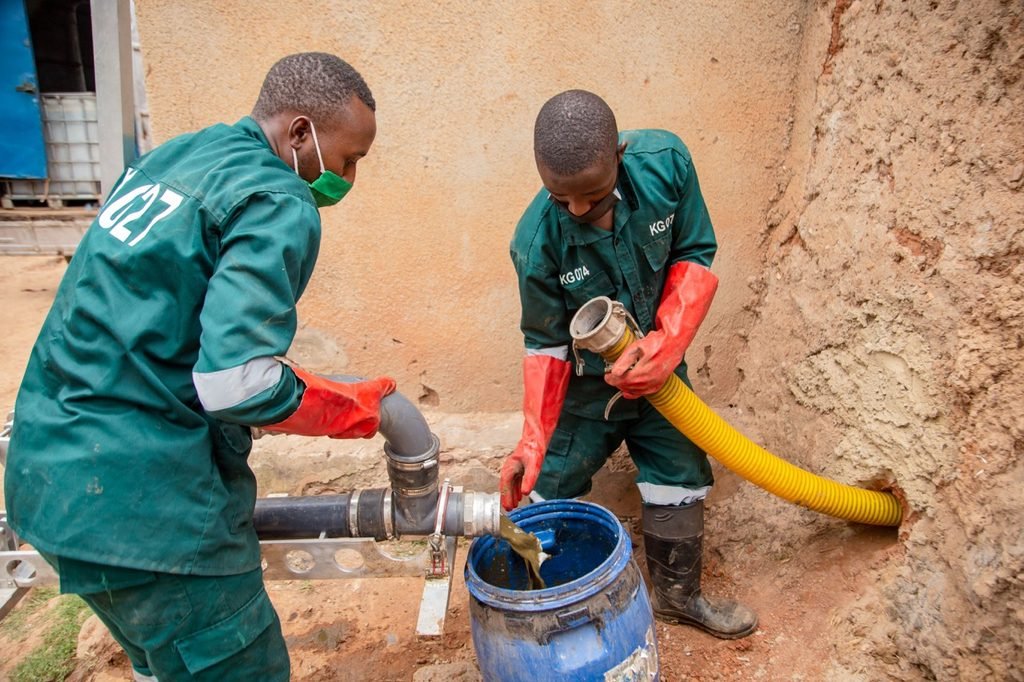
The researchers used a hierarchy of controls to frame their recommendations. This approach prioritises eliminating or reducing hazards through changes to equipment and work processes. Administrative measures come next, with personal protective equipment (PPE) serving as the last line of defence.
For pit emptiers, eliminating the work itself is not an option: pits still have to be emptied. But the risks associated with particular tasks can be reduced.
Engineering measures include pumping directly into tanks where possible, using smaller barrels and reducing the distances loads have to be carried. Pits can also be designed with access points, avoiding the need to break open structures each time they have to be emptied.
Communities can help reduce exposure by keeping solid waste out of pits. Providing bins inside toilets and designing latrines to discourage the disposal of rubbish can reduce the need for manual removal.
Equipment itself should also be designed with safety in mind. Hoses that burst and spill sludge create avoidable exposure, while machines that require operators to maintain awkward working postures need to be redesigned.
Administrative measures can address risks that equipment and infrastructure cannot eliminate. These include providing handwashing facilities or sanitiser at worksites, rotating tasks to reduce prolonged lifting, using teams of two to carry barrels, and establishing safe operating procedures for each technology. Regular refresher training is also important.
PPE remains essential, but it must be appropriate for the work and available in sufficient quantities. The webinar discussion highlighted a practical problem: protective equipment that is too hot, uncomfortable or difficult to breathe in may not be worn. In some cities, businesses rely on cheaper equipment that wears out quickly or on donations that cannot guarantee a consistent supply.
Rachel Sklar, a professor of public health at the University of Washington who facilitated the webinar, said both cost and acceptability influence the equipment workers receive. Protective clothing needs to be suitable for outdoor work and local temperatures while still providing adequate protection.
Lessons for other cities
Rutayisire said the fact that workers in the four study cities faced many similar challenges despite differences in local conditions. This indicated the lessons could be applied elsewhere. Skar agreed, but said pit design, the distance between a household and the pit, the duration of the job and the type of access meant that each city would need to assess its own topography and climate, which can influence exposure and working conditions.
The researchers acknowledged several limitations to the study. These included the cost of microbial testing, difficulties capturing all workers and activities on video, and the time required to review the footage. They suggested that future research could benefit from larger samples, more comprehensive video coverage and more affordable testing methods.
The broader message, however, was clear. A technology should not be judged only by how effectively it empties a pit, but also by how well it protects the people doing the work.
The researchers called for solutions to be developed with workers rather than simply imposed on them. They also highlighted practical steps utilities and sanitation partners can take, including providing reliable channels through which workers can raise concerns and ensuring access to appropriate protective equipment.
Ultimately, safe pit emptying requires more than mechanisation or protective clothing. It means paying attention to the entire job – from the design of pits and equipment to the way work is organised and carried out.
The webinar recording and project findings are available at https://fsmaction.org/knowledge-centre/.
Written by Jive Media Africa, communications partner on the FSM Action Research Project. The project is funded by the Gates Foundation.